



Sustainable lifestyle changes for beginners provide practical methods to reduce personal environmental footprints without overwhelming daily routines. The U.S. Environmental Protection Agency identifies energy efficiency and minimizing waste as especially cost-effective climate actions according to the EPA climate change guidelines. Adopting eco-friendly habits requires systematic planning rather than drastic, sudden overhauls. Households often struggle when attempting too many adjustments simultaneously. Therefore, focusing on high-impact areas delivers superior results.
Table Of Content
- Understanding the Foundations of Sustainability
- Implementing Energy Efficiency in the Home
- Optimizing Transportation and Mobility Choices
- Transforming Food Consumption and Reducing Waste
- Adopting Reusing, Repairing, and Recycling Practices
- Tracking Progress and Maintaining Momentum
- Key Takeaways
- What are the most important sustainable lifestyle changes for beginners?
- How does food waste impact the environment?
- Why is source reduction preferred over recycling?
- How can I reduce my transportation emissions without buying an electric car?
- What is the financial cost of household food waste?
- Conclusion
Understanding the Foundations of Sustainability
Sustainable living centers on meeting current human needs without compromising the ability of future generations to meet theirs. Small, consistent shifts in consumer behavior accumulate into substantial aggregate impacts across communities. When beginners evaluate their daily routines, identifying resource leakage becomes the primary objective. Water wastage, unmanaged electrical consumption, and excessive single-use packaging represent primary targets for initial intervention. Tracking resource utilization establishes a clear baseline for measuring personal progress.
Prioritizing interventions based on quantifiable impact ensures that beginners do not waste energy on trivial tasks while ignoring major emission sources. According to the United Nations, transportation produces nearly one-quarter of global energy-related greenhouse-gas emissions as outlined by the UN sustainable transport report. Recognizing this statistical reality allows individuals to align their daily commuting habits with broader ecological objectives. Understanding supply chain footprints helps consumers select durable goods over disposable alternatives.
Implementing Energy Efficiency in the Home
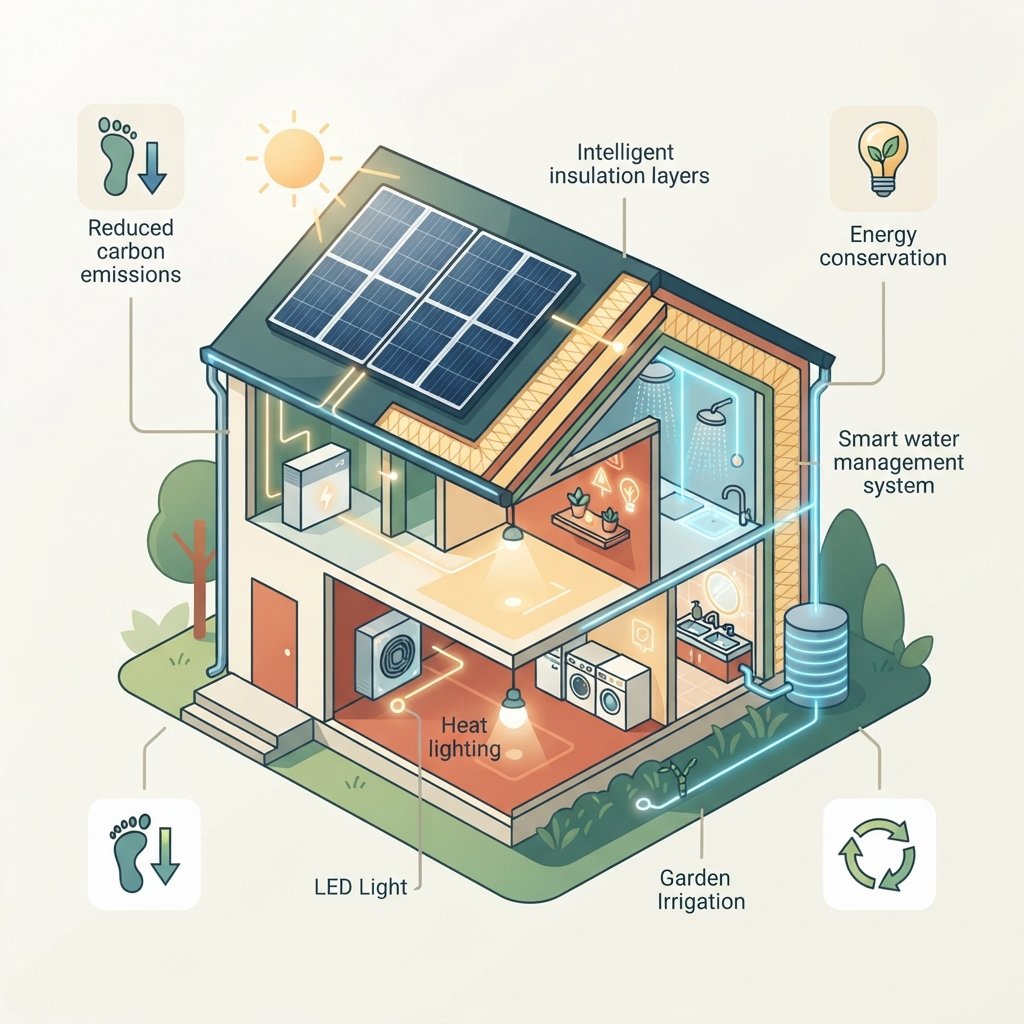
Residential energy consumption accounts for a significant portion of household carbon footprints. The EPA recommends energy- and water-efficient appliances, proper insulation, and maintained heating and cooling systems to improve residential performance. Simple adjustments like sealing window drafts, lowering water heater thermostats by a few degrees, and switching to LED lighting yield immediate reductions in utility bills. Installing programmable thermostats prevents unnecessary heating or cooling while occupants sleep or travel.
Proper maintenance of existing HVAC equipment prevents premature failure and lowers energy demands. Clean filters permit proper airflow, which reduces strain on compressor motors. Unplugging phantom load electronics—devices that draw current even when turned off—stops silent energy drains. Transitioning to green power tariffs through local utility providers represents another accessible step for residents who cannot install rooftop solar panels immediately.
Optimizing Transportation and Mobility Choices
Mobility patterns dictate a substantial share of personal greenhouse gas emissions. Walking, cycling, public transit, and carpooling are official EPA recommendations for reducing transport impacts. Commuters who replace even two single-occupancy vehicle trips per week with active transport or mass transit notice measurable declines in fuel consumption. Combining errands into single trips minimizes cold-start engine wear and fuel waste.
Vehicle maintenance directly influences fuel efficiency and emission levels. Maintaining correct tire pressure reduces rolling resistance, thereby improving fuel economy by a noticeable margin. For households considering vehicle replacement, transitioning to hybrid or battery-electric platforms provides long-term emissions reductions. However, maximizing the lifespan of an existing internal combustion vehicle often remains environmentally preferable to manufacturing a new car prematurely.
Transforming Food Consumption and Reducing Waste
Food systems generate considerable environmental pressure through land conversion, water extraction, and supply chain logistics. The United Nations notes that food choice usually matters more than food miles or packaging, because transport and packaging typically represent only a small share of food-related greenhouse-gas emissions according to the UN food climate research. Eating more plant-rich meals lowers environmental impact compared with an average meat-based diet, particularly in high-income countries where animal product consumption exceeds nutritional requirements.
Preventing food waste before composting or disposal ranks as a top priority for sustainable households. The EPA hierarchy places source reduction first; meal planning, checking existing supplies, and buying only what is needed are recommended steps according to the EPA sustainable management of food guidance. A typical U.S. family of four spends almost $3,000 annually on uneaten food, highlighting the severe financial penalty of poor kitchen management as detailed by the EPA preventing wasted food resource. Food waste wastes the resources used before disposal, including land, water, energy, production, processing, transport, preparation, and storage inputs.
Adopting Reusing, Repairing, and Recycling Practices
Material consumption drives industrial extraction and manufacturing emissions. Reusing, repairing, and recycling are recommended, but reduction and reuse should come first in any zero-waste hierarchy. Before discarding broken household items, beginners should explore local repair cafes or manufacturer warranty programs. Extending the operational life of electronics, furniture, and textiles directly curtails the demand for virgin raw materials.
When items reach the end of their functional utility, proper sorting ensures maximum recovery rates. Contaminated recycling bins cause entire batches of recyclable materials to enter landfills. Rinsing containers and consulting municipal sorting guidelines prevents processing errors. Purchasing secondhand goods through thrift stores or online marketplaces keeps durable items in circulation and diverts them from waste streams.
Tracking Progress and Maintaining Momentum
Establishing sustainable habits requires patience and structured self-evaluation. Beginners should introduce no more than two new eco-friendly practices per month to prevent burnout. Maintaining a journal or using digital tracking tools helps monitor utility savings and waste reduction metrics. Celebrating small milestones reinforces positive behavioral loops and encourages long-term adherence.
Community engagement amplifies individual efforts. Sharing successful strategies with neighbors, participating in local clean-up drives, or supporting community gardens fosters collective resilience. Systemic change relies on grassroots participation, and individual actions frequently inspire broader cultural shifts within local networks. Consistency ultimately outweighs perfection when building a resilient, low-impact lifestyle.
Key Takeaways

- Focus initial efforts on high-impact areas like home energy efficiency and food waste reduction.
- Prioritize reduction and reuse over recycling and disposal.
- Utilize active transport and public transit to lower personal transport emissions.
- Plan meals carefully to avoid the financial and environmental costs of discarded food.
- Implement changes gradually to ensure long-term habit formation.
What are the most important sustainable lifestyle changes for beginners?
Focusing on energy efficiency at home, reducing food waste, and optimizing transportation choices represent the highest-impact initial steps for beginners entering sustainability journeys.
How does food waste impact the environment?
Food waste generates greenhouse gas emissions and squanders valuable resources such as water, land, energy, and labor utilized during agricultural production and distribution.
Why is source reduction preferred over recycling?
Source reduction prevents the generation of waste entirely, whereas recycling still requires energy inputs and industrial processing to process discarded materials into new goods.
How can I reduce my transportation emissions without buying an electric car?
Walking, cycling, utilizing public transit, carpooling, and combining vehicle errands into single trips lower transport-related emissions without requiring an immediate vehicle purchase.
What is the financial cost of household food waste?
A typical U.S. family of four spends nearly $3,000 annually on uneaten food, demonstrating that waste prevention yields immediate monetary savings alongside ecological benefits.
Conclusion
Adopting sustainability is a progressive process rather than an all-or-nothing destination. By focusing on fundamental areas—such as improving home energy use, streamlining daily mobility, minimizing food waste, and prioritizing repair over replacement—beginners can build a resilient foundation for a low-impact life. Every mindful choice compounds over time, proving that individual actions collectively drive substantial environmental preservation and long-term resource security.


No Comment! Be the first one.